
100 Bad Paintings: #9
Out of My Head, Onto the Page

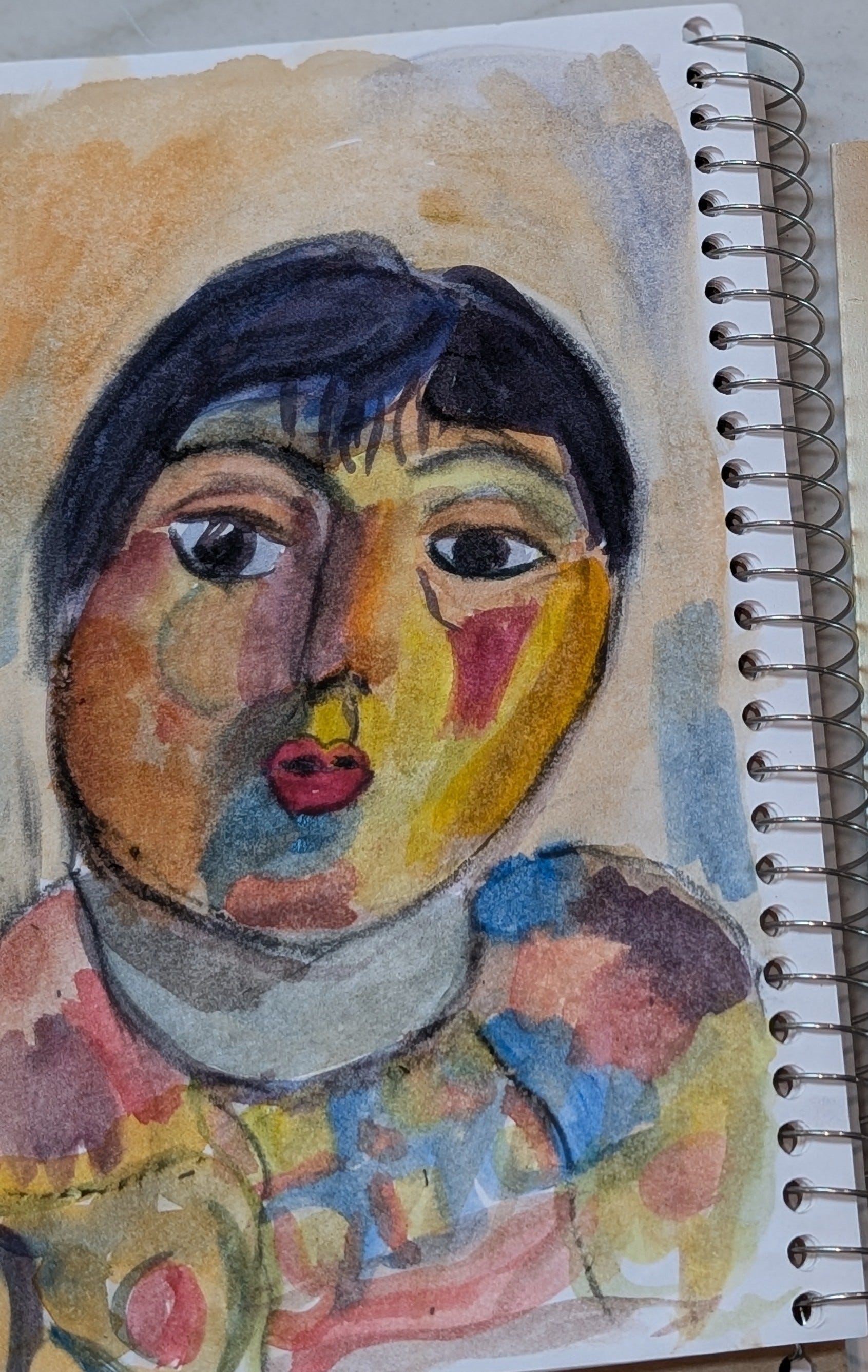
Notes from a rainy week of museums, mistakes, and rediscovering momentum.
This series of bad paintings has been a surprising gift, a slow, steady unpacking of everything that gets in the way of joyful time in the studio. Each little tripwire that tangles my joy or hijacks my momentum reveals a new layer.
Last week, I finally finished a painting. Hurrah! I thought. Momentum at last! But right on cue, a new snag: What now? What to paint? Do you wrestle with this, too, the search for what excites you next?
Overthinking is my constant studio companion. The critical voice crouches, waiting for me to pick up a brush so it can launch its familiar attack. A trainer once told me the first 10 minutes of any physical or mental effort are always tough—the body and mind rebel. But if you push through, you often find your rhythm. With painting, it’s reversed: I get 10 minutes of bliss… then the inner struggle kicks in. And sometimes, I can’t climb back out.
Artist Louise Fletcher has a wonderful diary entry on this almost-universal issue. We overthink. We believe—at least I do—that we have to know how to paint before we start painting. But that’s impossible.
It’s like planning a vacation. You can plan all you want, but at some point, you just have to go—and let it unfold.
After months of hustle, I took a break and headed to sunny Southern California—just in time for a week of atmospheric rivers. Rain, every day but one. Like painting, I couldn’t have predicted it. Even the forecast swore it’d be sunny.
What makes for bad sightseeing weather makes for excellent art museum weather.
In the middle of one downpour I made my way to the Long Beach Museum of Art. Celebrating their 75th anniversary, they are showcasing the Milton Wichner Collection.
Wichner, a Harvard-trained lawyer, moved to Southern California in 1936 to start a practice. In the ‘30s and ‘40s, the region became a refuge for European artists fleeing war and persecution. Wichner quietly built a stunning collection of abstract modernists: Alexej Jawlensky, Wassily Kandinsky, Oskar Fischinger, László Moholy-Nagy, and Lyonel Feininger.
Kandinsky’s work hit me like déjà vu—familiar and strange. My college roommate had a giant print of In the Black Square in our apartment. I hated it at first. But over time, I grew to appreciate it—maybe even love it.
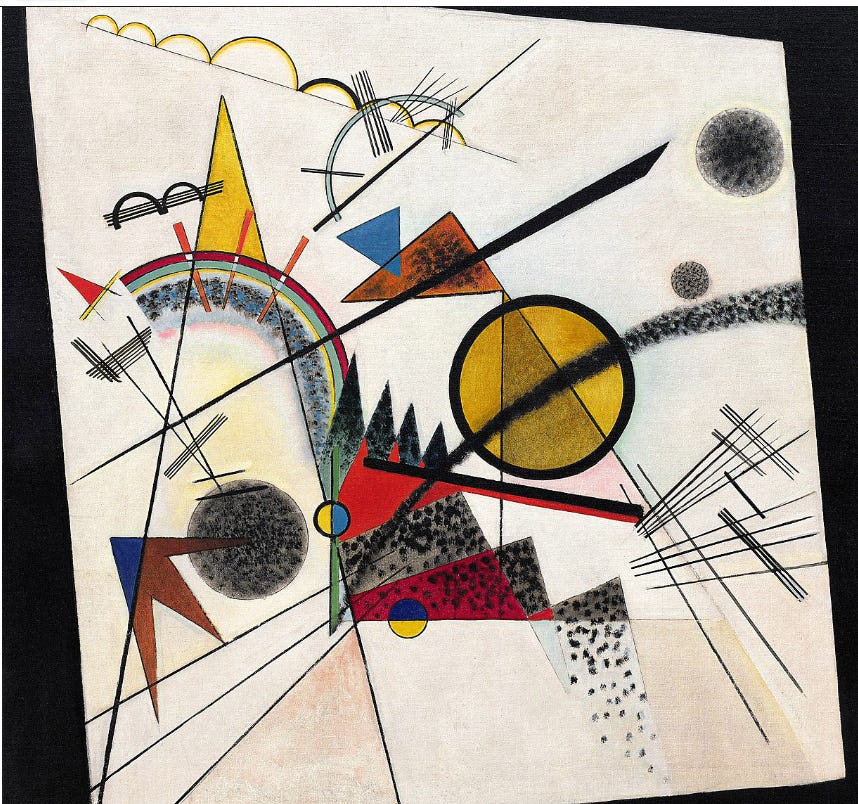
More than any other painting, this painting taught me that art reveals itself slowly. It takes time to truly see.
I was eager to explore the range of Kandinsky’s work, especially his watercolors. But what caught me off guard was the emotional force of Alexej Jawlensky’s paintings—they hit me straight in the chest.
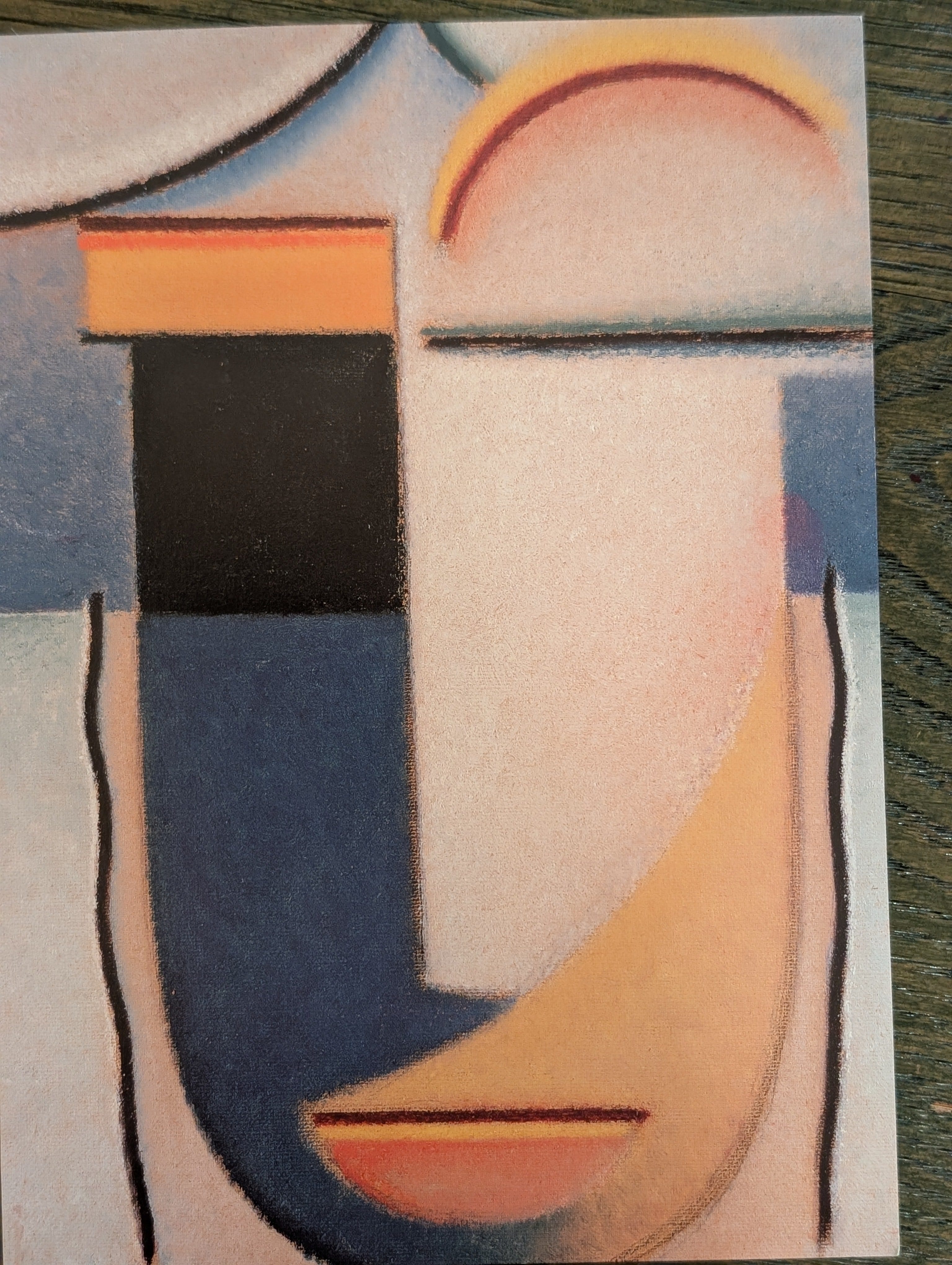
The museum owns a series of Jawlensky’s faces that playfully echo the Russian iconography of his childhood, using color and form in bold, experimental ways. That same spirit of play reminded me of last winter’s Aldwyth Exhibit at Hilton Head Costal Discovery Museum where, she too, was playing with watermelons,
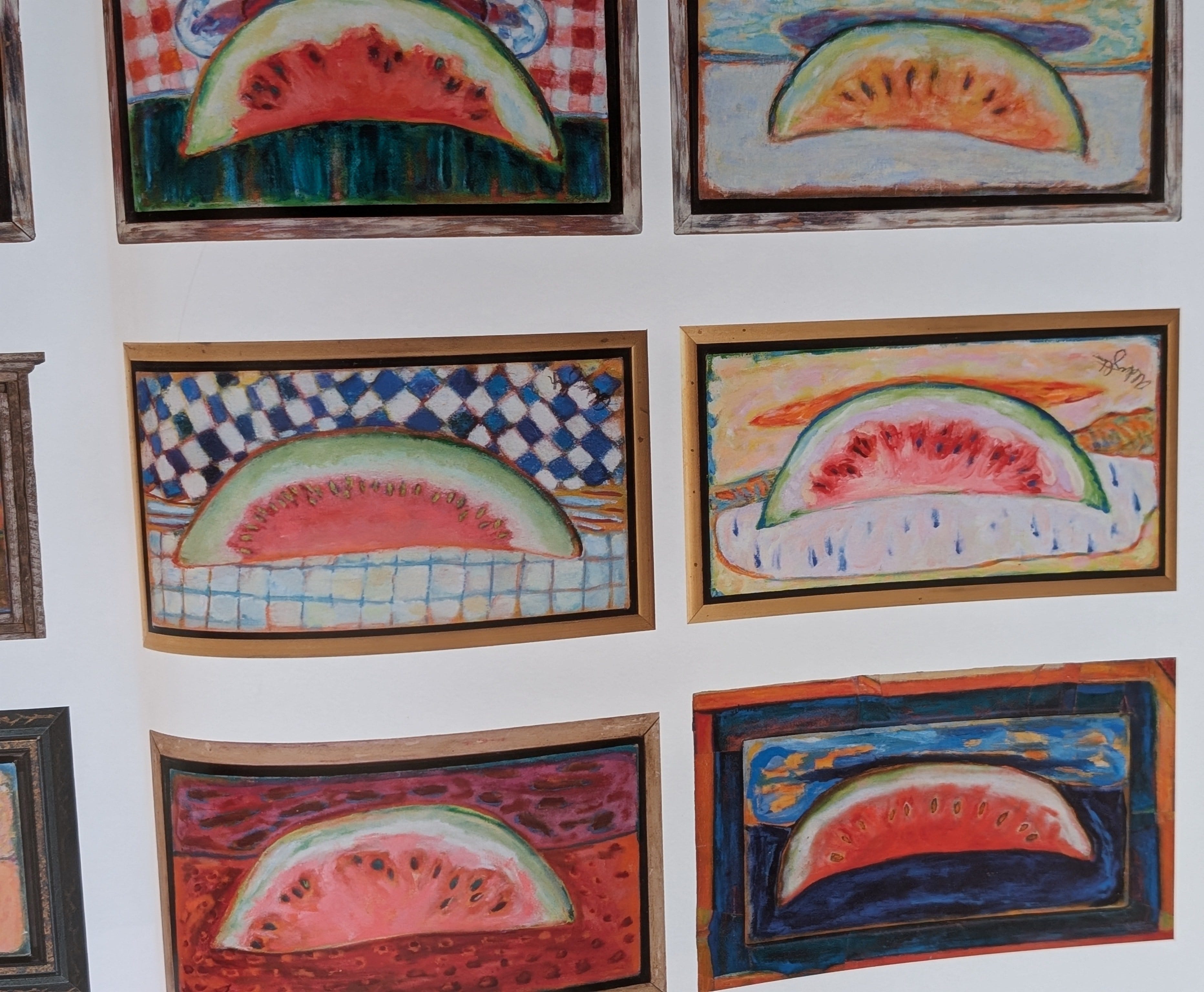
squares
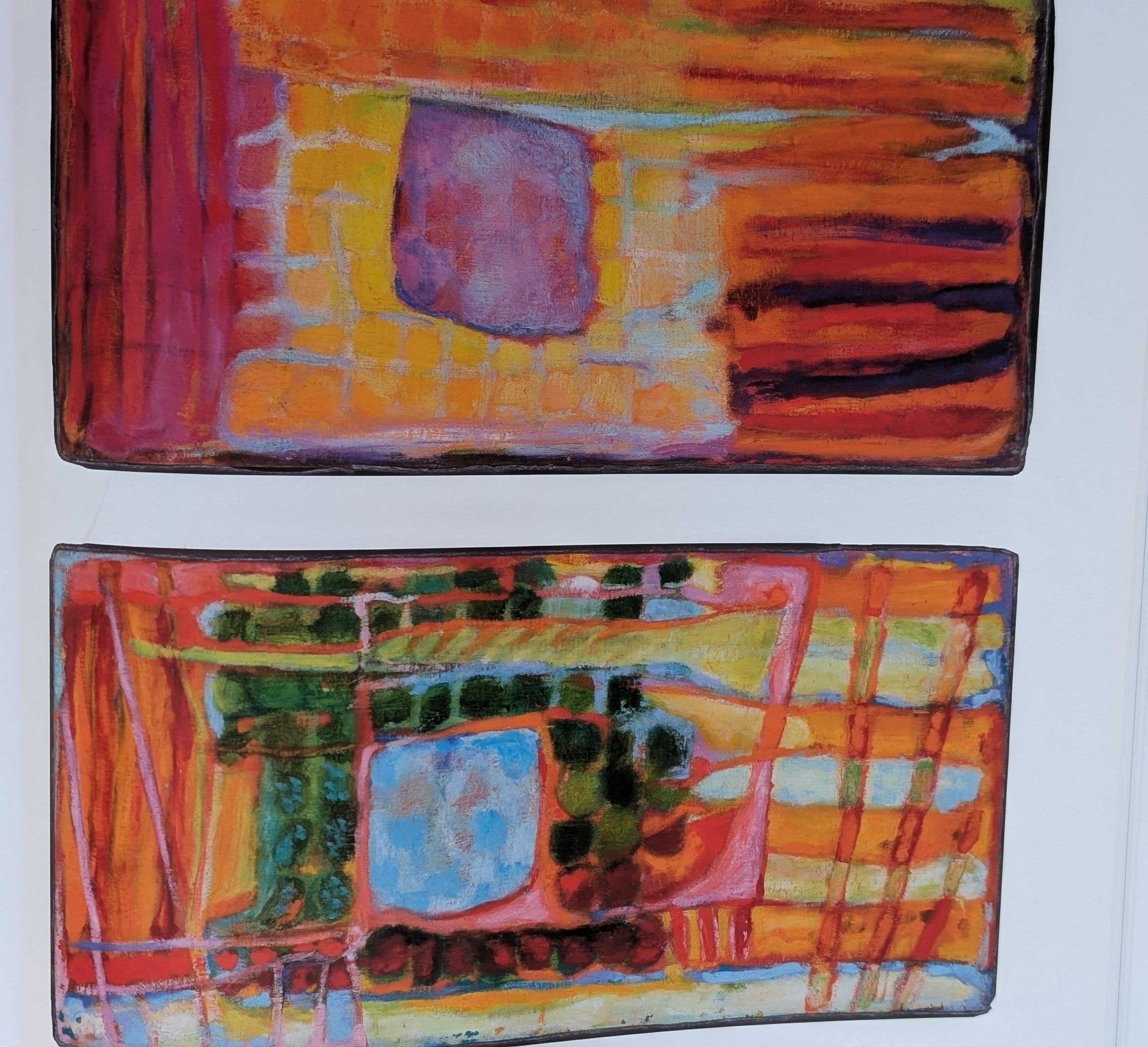
and eggs.
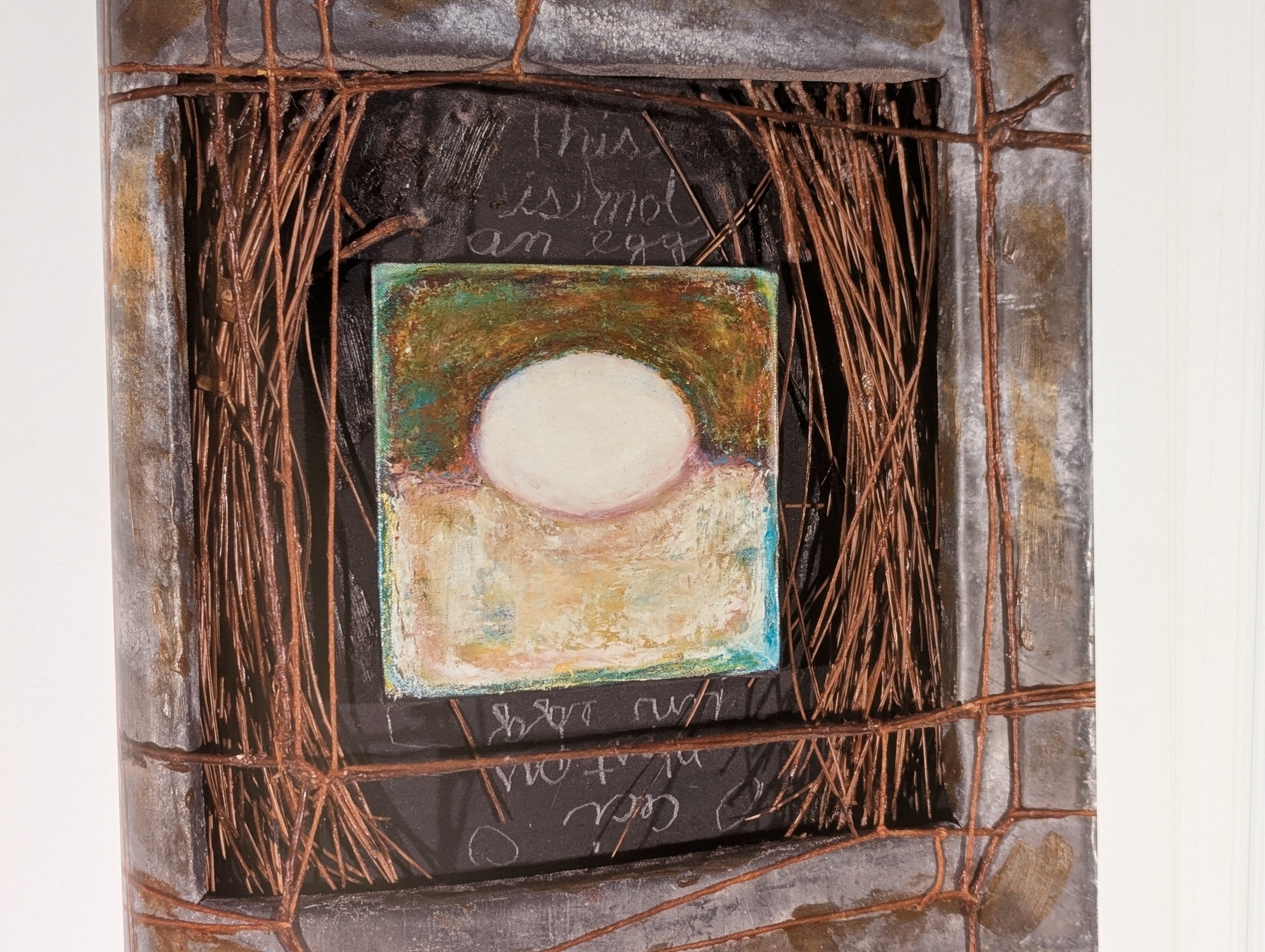
Suddenly, I remembered an intention I’d formed—and promptly forgotten—to take a simple shape (a face, a square, a watermelon, an egg) and use it as a container for experimentation.
This neatly tied into something I’d heard from artist William A. Schneider: the idea of practicing like a musician. Instead of just painting, you practice the Five Things That Matter—
Drawing
Values
Edges
Temperature
Composition
This approach offers a way to practice without boredom. Like Aldwyth, I don’t have to stick to just one thing. Working with a handful of motifs keeps the process fresh. And Jawlensky? He’s sparking ideas for simplifying images in joyful, unexpected ways.
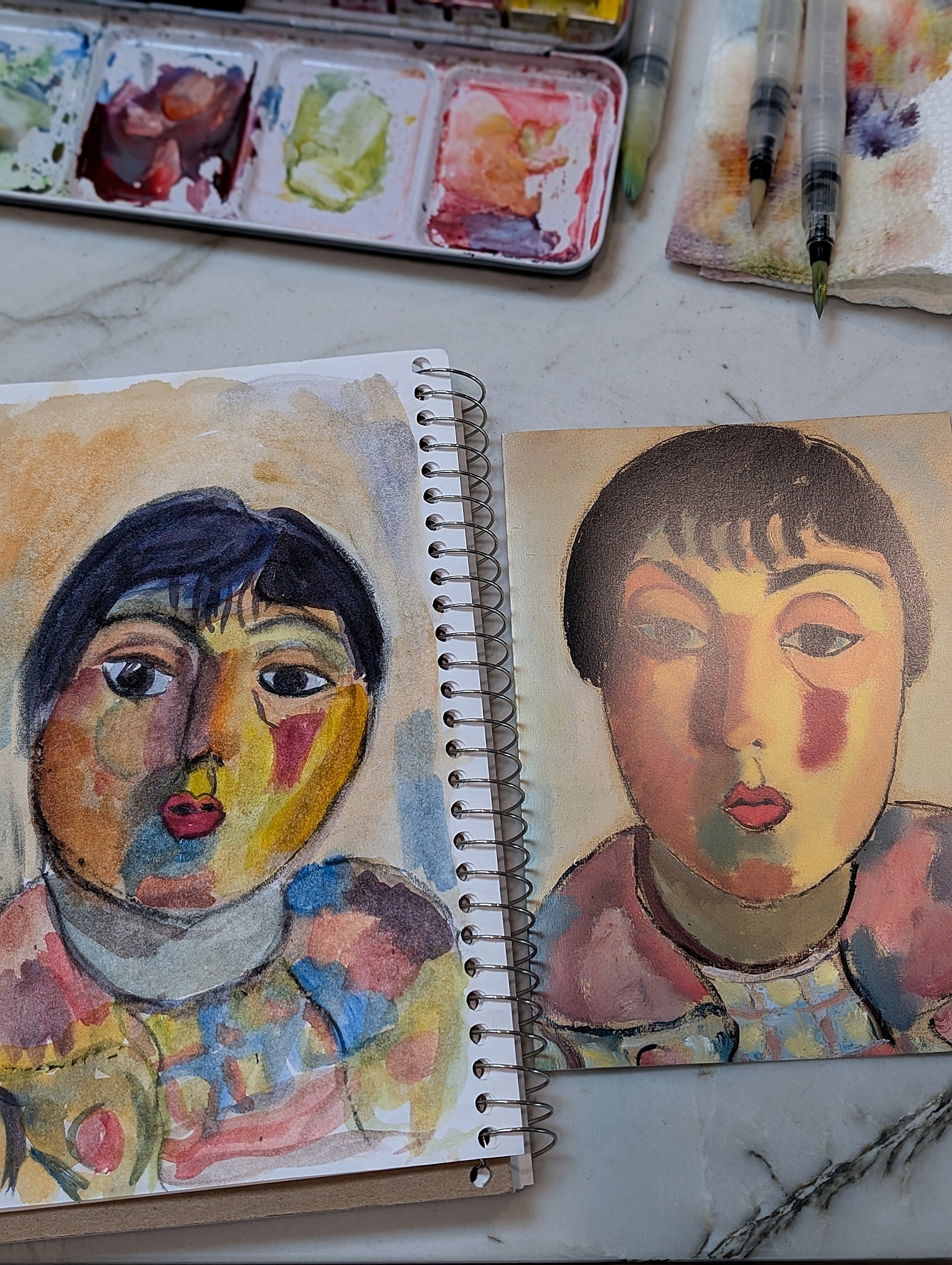
This gave me a way to practice without boredom. Like Aldwyth, I don’t need to limit myself to one motif; having a handful keeps things fresh. And Jawlensky is showing me how much fun there is in simplifying an image, playing with color and form.
At the last minute, I’d tossed a small tin of paint, a notebook, and some water brushes into my bag. I’m so glad I did. The best way I know to lock in a lesson is to move it from thought to action; out of my head and onto the page.
That afternoon, sitting with rain tapping the windows and paint blooming on paper, I wasn’t just looking at art, I was in conversation with it. And for the first time in a while, the studio filled with color and joy.
Creative Challenge:
Try this: pick one simple shape—a square, a face, an egg, a watermelon—and use it as your playground. See how many ways you can reimagine it. Let boredom be your cue to try something a little wilder.
Let me know how it goes!
Xo, Felicia
If you regularly read Spark Your Creativity and want to support me in creating and posting each week, become a paid subscriber.
Loving the push and curiosity here, Felicia!