
100 Bad Paintings: #8
A Breakthrough in the Studio

What helped me finally finish a painting after months of struggle
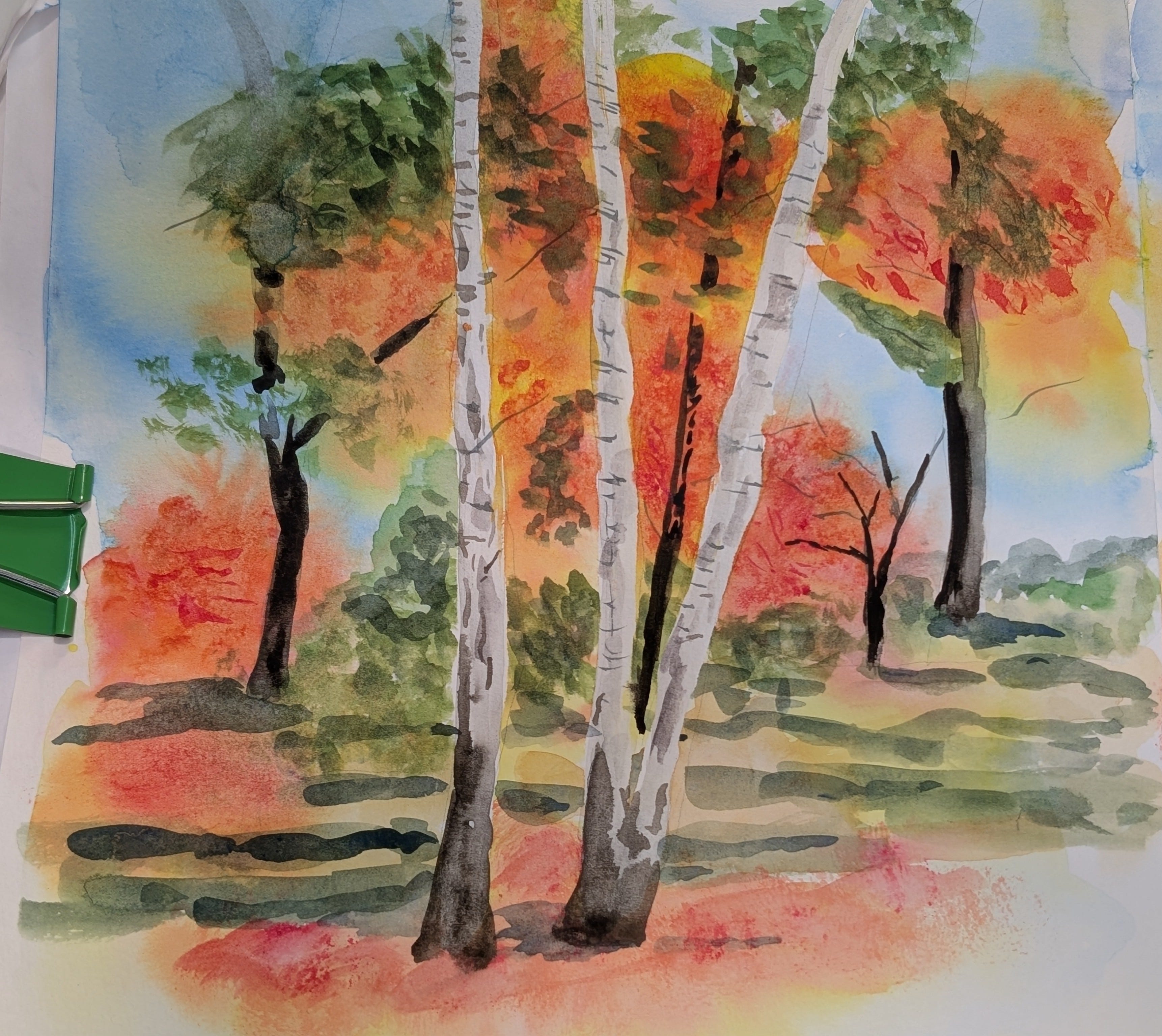
.
For months, I was stuck in a loop: I’d start a painting with energy, only to quickly lose the thread, unable to bring my vision to life. The more this happened, the harder it became to even walk into the studio. Just crossing the threshold, I’d feel stress tightening its grip.
To coax myself back, I enrolled in a few guided courses. They worked—sort of. I was painting again. But the moment I strayed from the lesson or tried something original, the tension returned. Doubt and fear filled the room like smoke.
This wasn’t new. When I returned to writing after decades away, I hit the same wall. So I knew the only way forward was through: short daily sessions, revisiting lessons, reminding myself that yes—I can finish something. I just had to keep painting.
Three months in, though, I still felt stuck. I was showing up almost every day, working small, sitting with discomfort, and counting it as a win. Yet most paintings ended in abandonment.
Each session became an embodied prayer:
Here I am. I’m showing up. Hello, muse—won’t you come out and play?
When I reach this kind of hole—deep, wide, and hard to climb out of—I know it’s time to bring in reinforcements. The courses helped, but I needed more. So I turned to podcasts, hoping to hear from other artists who knew this shaky, uncertain place.
As I painted, I listened to two of my go-to podcasts: Learn to Paint with Kelly Anne Powers and The Savvy Painter with Antrese Wood. I found two powerful insights.
First, from Powers’ interview with Sterling Edwards: He told a story of a student who created a stunning painting in class. Edwards admired it but turned away to help another student. Moments later, he heard the sound of paper tearing. The student had ripped up the work. Why? Because it didn’t match the vision in his head.
Edwards’ advice: Don’t let the picture in your head blind you to the beauty in front of you. Get out of your head and into the work.
Not long after, I saw David Hockney’s new show—his lopsided chairs were just the nudge I needed.
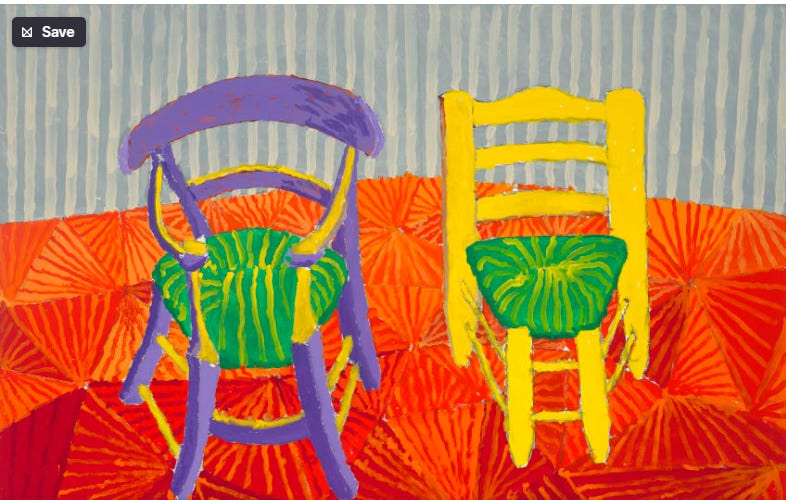
Permission, straight from Hockney, to be as wonky and weird as I wanted. Relief.
Then came Antrese Wood’s episode titled “Why You Can’t Finish a Painting (And What to Do About It).” It felt like it was made for me. She broke it down:
The moment every painting goes sideways—and why your brain thinks it means failure
What you’re actually avoiding when you start a new canvas
How our idea of “finished” can keep us stuck
The cost of unfinished work (it’s more than clutter)
Six strategies to break the pattern and complete something
This week, I’ve been back in the studio—and it feels different. The struggle has softened. The resistance has cracked. It’s a breakthrough, arriving just in time, right after launching my new book, Yield: A Quixotic Quest to Rescue Virtue. (You can learn more about that here.)
Right now, I need the studio to be a space of rest, play, and exploration. And thankfully, it is again.
If you’re in that stuck place too—unable to finish a painting—please know you’re not alone. Even seasoned painters hit dry spells.
Here’s what helped me. Maybe it’ll help you, too:
Resource yourself. Take a class. Listen to a podcast.
Share the struggle. Post in our Cedar Valley Painters Facebook group. We’re here for you.
Seek fresh inspiration. Look at Hockney’s chairs. Or find your own “permission slip.”
Never doubt your voice. Your art matters. Especially to you. Don’t let a dry patch convince you otherwise.
And I’d love to hear from you—
What’s one thing that helps you move through a creative dry spell?
Xo
Felicia
If you regularly read Spark Your Creativity and want to support me in creating and posting each week, become a paid subscriber.